Diagnose the problem. Then decide if it's worth solving.
Diagnose is a complimentary 90-minute business review designed to help both parties understand whether there is a genuine opportunity for improvement – and whether further investigation is justified.


Why this stage exists
Many businesses know something isn’t quite right.
Reporting takes too long. Information is difficult to find. Teams spend time working around systems instead of benefiting from them. Managers suspect the business could operate more efficiently, but are unsure where to start or which problems are most important to solve.
The challenge is that symptoms are easy to see, but causes are often harder to identify.
What happens during a Diagnose session
The session is typically held with key stakeholders from the business, and works best face to face – ideally with a whiteboard, so the business and its process flow can be mapped visually. Where geography makes that impractical, remote sessions are equally effective.
During the discussion, we seek to understand:
What the business does and who it serves
How work actually flows end to end
Which challenges cause the greatest frustration
Which areas absorb the most management time
What improvement could unlock for the business
What success would look like in practice
The objective is not to solve the problem during the session.
The objective is to determine whether the problem is worth solving, and whether there is enough value in investigating it further.
Common pain points
Every business describes it differently, but the underlying issues tend to repeat. These are the topics that come up most often:
Quoting and estimating
Scheduling and planning
Reporting and visibility
Data quality
Systems integration
Manual processes
Customer experience
Operational efficiency
Growth constraints
If a couple of these sound familiar, that’s usually enough reason to start the conversation.
What Diagnose is - and what it isn't
Being clear about the boundaries is what makes the session useful.
It’s 90 minutes to understand your business, not to sell you something.
but
Diagnose isn't
-
Sales presentation
-
Software demonstration
-
Solution design workshop
-
Quoting exercise
-
Deep technical audit
Diagnose is
-
Structured business conversation
-
Collaborative working session
-
Visual process mapping
-
Focus on root causes
-
Qualification for both sides

What comes out of it
By the end of the session, both parties should have a clearer understanding of:
- The challenges facing the organisation
- The potential opportunity for improvement
- The likely areas requiring deeper investigation
- Whether a Define engagement would be worthwhile

Could you ask these questions yourself?
Of course.
The difficulty isn’t asking – it’s that symptoms are easy to see and causes are not. The slow quoting process and the reporting problem often turn out to be the same underlying issue. And deciding which problem is worth solving first is a commercial judgement, not just an operational one.
We bring someone into the room who isn’t constrained by existing assumptions, departmental boundaries or historical decisions.
What happens next
If both parties conclude that a meaningful opportunity exists, the next step is Define – where broad understanding is replaced by detailed analysis and properly agreed requirements.
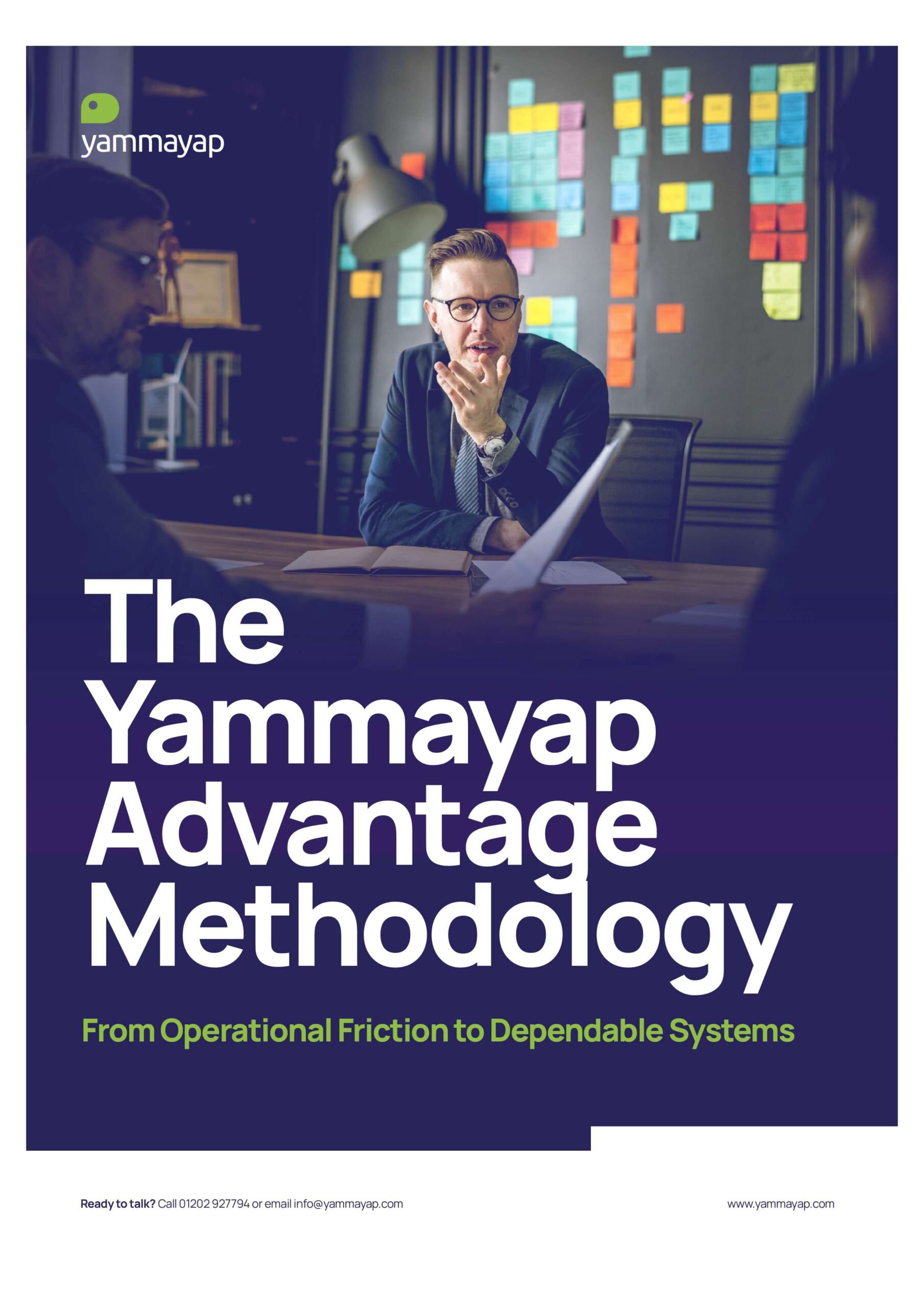
Take the methodology with you
A complete guide to all six stages – Diagnose, Define, Design, Develop, Deliver and Depend – including what happens at each stage, what you receive, and how the stages connect.
Written to be shared with your team.
Start with a conversation, not a commitment
Ninety minutes to understand how your business works and whether there’s something worth solving.
Free, 90 minutes